
GCE A Level Computer Science Paper 2 – Ngahtech Mock 1
- Exam
- Cameroon GCE Board
- Year
- 2026 · Mock 1
- Level
- Upper Sixth
- Duration
- 180 min
- marks
- 100
Source: Original Ngahtech mock paper for GCE A Level Computer Science Paper 2. Not an official GCE Board paper.
Take this paper in practice or timed mode: when you submit, you get your score and the full solutions with an explanation for every question.
Answer all five questions. Each question carries 20 marks; the marks for each part are shown.
- Show your working in calculations and trace tables.
- Draw diagrams in pencil where they are asked for.
- You have 3 hours.
After you submit, compare your answers with the marking scheme and give yourself marks, or ask a teacher to mark them.
- Question 1(a)Structural4 marks⏱ Suggested time: 7 min
A computer stores real numbers in 8 bits: a 5-bit mantissa followed by a 3-bit exponent, both in two's complement, with the binary point after the first bit of the mantissa.
Find the denary value of 01011\,011. Show your working.
- Question 1(b)Structural4 marks⏱ Suggested time: 7 min
Using the same format, give the normalised representation of -0.375. State how you know that your answer is normalised.
- Question 1(c)Structural6 marks⏱ Suggested time: 11 min
State the purpose of each of these registers: program counter, memory address register, memory data register, current instruction register, accumulator, status register.
- Question 1(d)Structural6 marks⏱ Suggested time: 11 min
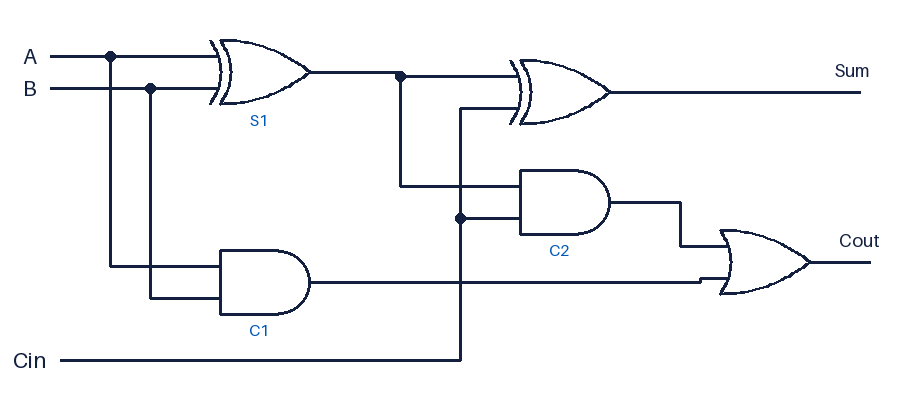
Figure 1 shows a full adder. 1. Complete its truth table for inputs A, B and Cin, giving Sum and Cout. 2. Explain how several full adders can be joined to add two 4-bit numbers.
- Question 2(a)Structural5 marks⏱ Suggested time: 9 min
Two booking clerks sell seats for the same bus at the same time from different computers. Using this example, explain what is meant by a race condition.
- Question 2(b)Structural4 marks⏱ Suggested time: 7 min
Explain how mutual exclusion prevents the problem in 2(a), and name one problem it can create.
- Question 2(c)Structural6 marks⏱ Suggested time: 11 min
Three processes arrive at time 0 in the order P1, P2, P3 with CPU burst times 5, 3 and 1 ms. 1. Draw a timeline for round robin scheduling with a time quantum of 2 ms. 2. Give the time at which each process finishes, and the average turnaround time.
- Question 2(d)Structural5 marks⏱ Suggested time: 9 min
- Distinguish between paging and segmentation.
- Explain how virtual memory lets a word processor and a spreadsheet run together when their combined size is larger than RAM.
- Question 3(a)Structural4 marks⏱ Suggested time: 7 min
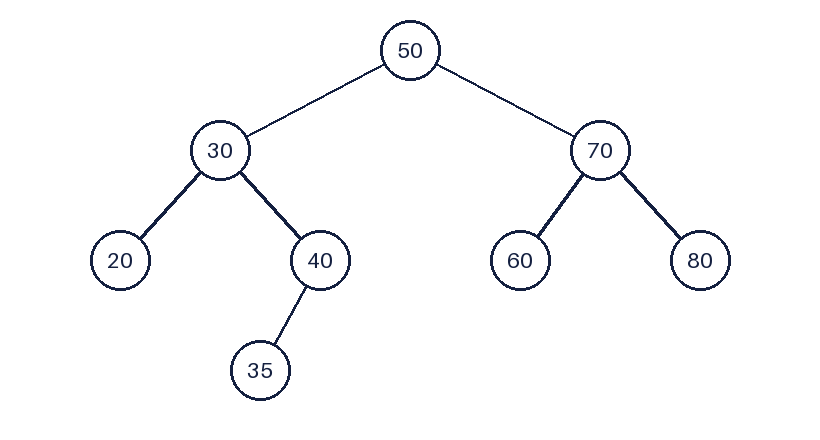
Figure 2 shows a binary search tree. 1. Give the order in which the keys were most probably inserted for the root to be 50. 2. Write the in-order and pre-order traversals.
- Question 3(b)Structural4 marks⏱ Suggested time: 7 min
Describe, step by step, how the key 65 is inserted into the tree in Figure 2, and state the number of comparisons needed to search for 35.
- Question 3(c)Structural4 marks⏱ Suggested time: 7 min
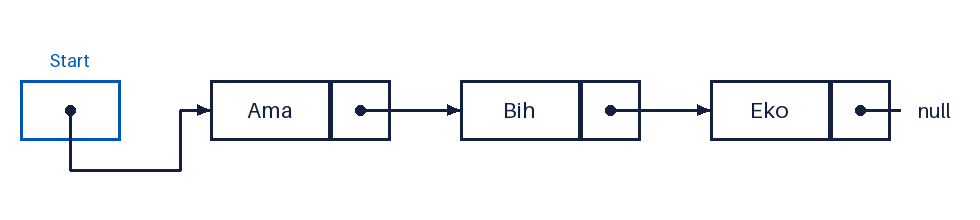
Figure 3 shows a linked list kept in alphabetical order. Describe how the name Bate is inserted, and explain why a linked list is better than an array for this.
- Question 3(d)Structural8 marks⏱ Suggested time: 14 min
Study the flowchart in Figure 4. 1. Dry-run it with A = 84 and B = 36, showing A, B and R after each pass. 2. State what the algorithm computes. 3. Write it as a recursive function
G(A, B).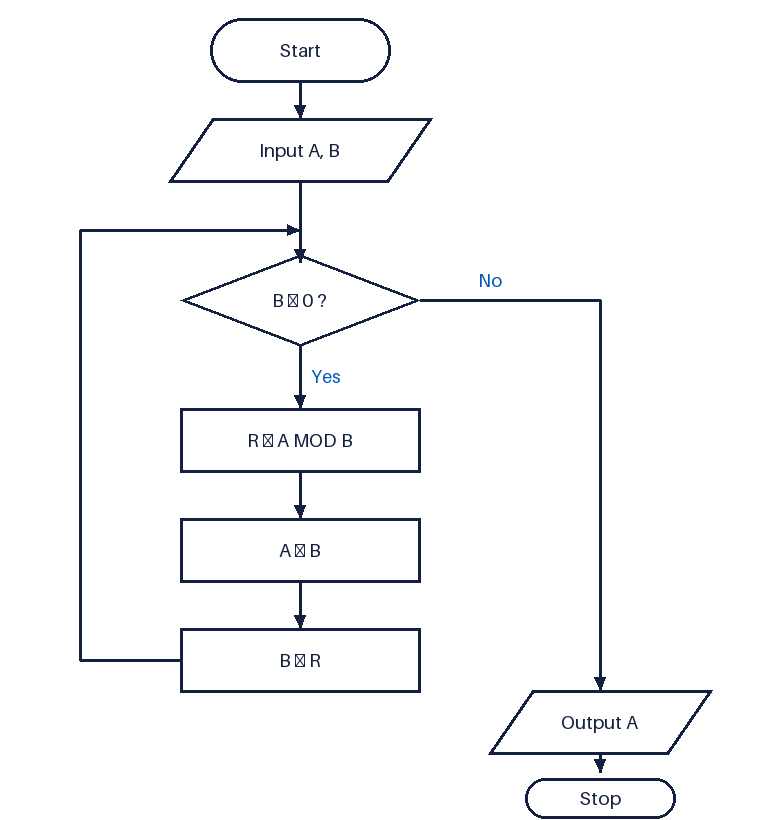
- Question 4(a)Structural6 marks⏱ Suggested time: 11 min
A school stores results in one table:
RESULT(StudentID, StudentName, Class, SubjectCode, SubjectName, Teacher, Mark)
A student takes many subjects and each subject is taken by many students. Normalise the data to third normal form, showing the tables with their primary keys (underlined or in bold) and foreign keys.
- Question 4(b)Structural2 marks⏱ Suggested time: 4 min
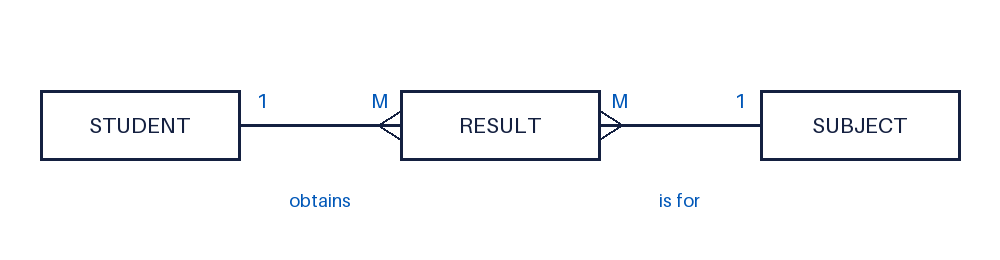
Figure 5 is an entity–relationship diagram for the tables in 4(a). Explain why the RESULT entity is needed.
- Question 4(c)Structural6 marks⏱ Suggested time: 11 min
Write SQL statements to: 1. list the names of students in class "U6S" in alphabetical order; 2. show each subject code with its average mark; 3. change Mark to 15 for student "S120" in subject "CSC".
- Question 4(d)Structural6 marks⏱ Suggested time: 11 min
Explain the four ACID properties of database transactions, using a Mobile Money transfer as the example.
- Question 5(a)Structural6 marks⏱ Suggested time: 11 min
A hospital network links several buildings. Explain the purpose of each of these devices: router, switch, bridge.
- Question 5(b)Structural6 marks⏱ Suggested time: 11 min
- Name the four layers of the TCP/IP model and give one protocol used at each.
- Explain why data is divided into packets.
- Question 5(c)Structural4 marks⏱ Suggested time: 7 min
Explain how asymmetric (public-key) encryption lets a patient send test results securely to a doctor who has never shared a secret with them.
- Question 5(d)Structural4 marks⏱ Suggested time: 7 min
Distinguish between a transaction processing system and a management information system, giving an example of each in a hospital.