


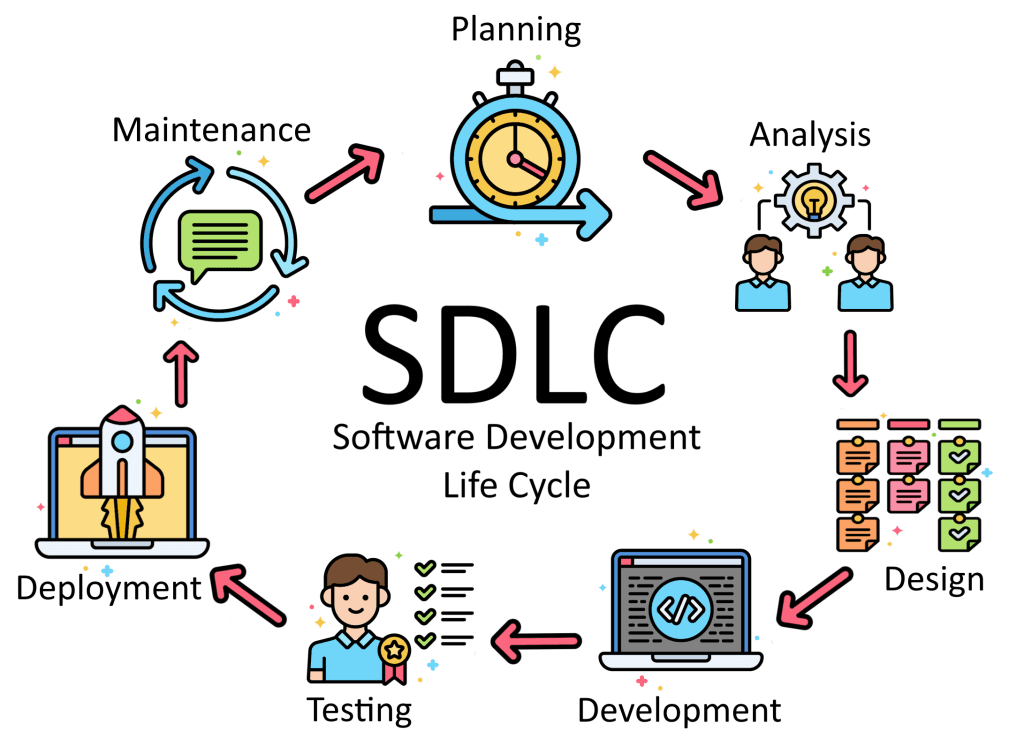
Ngahtech.com can structure its training programs around these models to provide practical, hands-on experience.
- Waterfall Training:
- How: Trainees are given a fixed, detailed project specification (e.g., “Build a static portfolio website”).
- Process: They must sequentially complete the Requirement Document, Design Mockups, Code, Test, and Deploy, without going back to a previous phase. This teaches discipline and the importance of upfront planning.
- Agile-Scrum Training (The most common for modern development):
- How: Trainees are divided into small teams and assigned a more complex, evolving project (e.g., “Build a task management app”).
- Process:
- A Product Owner (a trainer) provides a prioritized backlog.
- The team runs Sprint Planning meetings to select work for the next 2-week sprint.
- They hold Daily Stand-ups to sync up.
- At the end of the sprint, they demo a working feature in a Sprint Review and hold a Retrospective to improve.
- This teaches: Collaboration, adaptability, and time management.
- Kanban Training:
- How: Trainees work on a simulated support system or bug-fixing project.
- Process: They use a Kanban board (e.g., Trello or Jira). The focus is on pulling the next task only when capacity is available, visualizing bottlenecks, and improving flow. This teaches efficiency and continuous delivery.
- DevOps Training:
- How: Trainees work on a project where they must set up automated pipelines.
- Process: They learn to use tools like Git for version control, Jenkins/GitHub Actions for CI/CD, and Docker for containerization. This teaches the end-to-end responsibility for software, from code to deployment.
How Ngahtech.com Uses These Methodologies to Solve and Deliver Client Projects
Ngahtech.com doesn’t use a one-size-fits-all model. It selects the methodology that best fits the client’s problem.
Scenario 1: A Client with a Vague Idea for a Mobile App
- Methodology Used: Agile-Scrum
- How it Solves the Problem:
- Ngahtech’s Product Owner works with the client to create a high-level Product Backlog.
- The development team starts with a 2-week sprint to build the most critical feature (e.g., user login and profile).
- The client sees a working demo at the end of the sprint and provides feedback.
- The feedback is incorporated into the next sprint (e.g., adding social login). This iterative cycle reduces risk, ensures the client gets what they actually need, and allows for changes in the market.
Scenario 2: A Client Needing a Government Compliance Reporting Tool
- Methodology Used: Waterfall
- How it Solves the Problem:
- The requirements are strict, fixed, and documented in regulations.
- Ngahtech analysts create a detailed SRS (Software Requirements Specification) which the client signs off on.
- The team then designs, develops, and tests against this exact specification.
- The final product is delivered as a complete package. This ensures 100% compliance with the mandated requirements.
Scenario 3: A Client Needing Ongoing Support and Feature Updates for an Existing Platform
- Methodology Used: Kanban + DevOps
- How it Solves the Problem:
- Client requests (bug fixes, small features) are added to a Kanban board.
- The Ngahtech support team pulls tasks based on priority, working on them continuously.
- DevOps practices ensure that every code change is automatically tested and deployed to the live platform quickly and safely through a CI/CD pipeline.
- This provides the client with a responsive, reliable, and rapid update cycle.